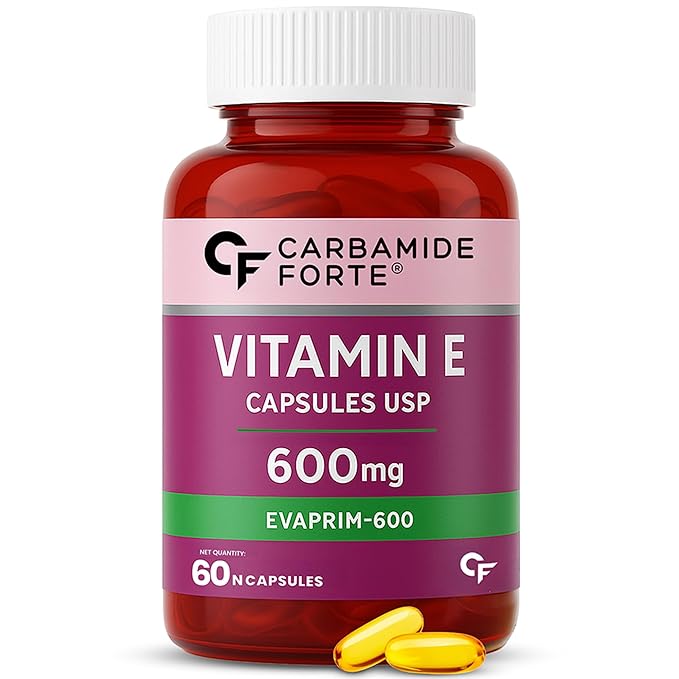
Vitamin E capsules can be a useful supplement in circumstances where dietary intake is low, where antioxidant support is needed (e.g. oxidative stress, certain metabolic or liver conditions), or in specific clinical scenarios (preterms, NASH, etc.). When used in moderate, well‑chosen doses and with attention to form and safety, many people may gain benefit with low risk.
What are Vitamin E Capsules
Vitamin E is a fat-soluble vitamin, a group of compounds including tocopherols and tocotrienols. The most biologically active form in humans is alpha‑tocopherol. Vitamin E capsules are dietary supplements containing one or more of these forms of vitamin E, often in an oil base, meant to be swallowed. Some are “natural” (derived from plant sources) and others “synthetic.”
Capsules typically contain vitamin E oil (or esterified form), sometimes mixed with inert oils, fillers, or capsules shell materials. They come in different strengths (measured in International Units, IU, or milligrams of alpha-tocopherol equivalents).
How Vitamin E Works in the Body
Antioxidant Action
One of the primary roles of vitamin E is acting as an antioxidant. It scavenges free radicals (reactive oxygen species, ROS) that are produced during normal metabolism or increased via environmental insults (UV radiation, pollution, smoking). If free radicals are not neutralized, they can damage lipids (especially cell membranes), proteins, and DNA. Vitamin E helps prevent or reduce that oxidative damage. Aware+3Healthline+3WebMD+3
Protection of Cell Membranes
Because vitamin E is fat soluble, it embeds in lipid (fatty) areas of cells—cell membranes, lipid layers. There it helps protect the membrane lipids from oxidation. This is important for maintaining membrane integrity, proper cell signaling, and function. Healthline+2Cleveland Clinic+2
Immune Function
Vitamin E supports immune responses. It may enhance immune cell function, reducing infections especially in older persons, and helps modulate inflammation (i.e. reduce excessive or damaging inflammation). Healthline+2Pathkind Labs+2
Other Roles
-
Enhancing skin repair and wound healing. Apollo Pharmacy+1
-
Helping maintain eyes and vision (protection against age‑related macular degeneration, cataracts). Healthline+2Apollo Pharmacy+2
-
Possibly playing roles in cardiovascular health (by protecting lipoproteins, reducing LDL oxidation), though outcomes in trials are mixed. Healthline+2Aware+2
Health Benefits of Taking Vitamin E Capsules
Below are several benefits associated with vitamin E supplementation, when needed, supported by research and practice.
-
Antioxidant Protection
Vitamin E capsules provide systemic antioxidant protection, which helps counter oxidative stress. This is especially relevant in situations of higher oxidative load (smoking, pollution, metabolic stress, chronic disease). Healthline+1
-
Skin Health
-
Helps in maintaining skin barrier, moisturization. Pathkind Labs+1
-
Fading of scars, stretch marks and improving appearance of fine lines & wrinkles due to its ability to promote protection and tissue repair. Apollo Pharmacy+1
-
Can help reduce UV‑induced damage when combined with other sun protection measures. Apollo Pharmacy+1
-
-
Hair & Scalp Benefits
Applied topically (by breaking open capsule) or taken orally, users report improved scalp condition, less hair breakage, maybe reduced hair fall. The vitamin E oil helps protect hair from oxidative damage and supports nourishment. Apollo Pharmacy+1
-
Eye Health
Some studies suggest that vitamin E, especially in combination with other nutrients (like vitamin C, zinc, lutein), may slow progression of age‑related macular degeneration. Also helps protect lens from oxidative damage which can contribute to cataract formation. Healthline+1
-
Immune System Support
Supplementation can help in boosting immune responses, especially in populations with weakened immunity or in older age. Apollo Pharmacy+1
-
Liver Health
Particularly in Non‑Alcoholic Fatty Liver Disease (NAFLD), some studies have shown that vitamin E supplement reduces liver enzyme levels (ALT, AST), improves liver histology, etc. Healthline+1
-
Anti‑Inflammatory Effects
Vitamin E has shown ability to reduce markers of inflammation in certain studies, due to its antioxidant functions and modulating immune / inflammatory pathways. Healthline+1
-
Possible Support in Special Conditions
-
Deficiency: In people who have malabsorption disorders, rare genetic disorders, prematurity (infants), etc., where vitamin E deficiency can occur, supplementation is essential. WebMD+1
-
Menstrual Pain / Dysmenorrhea: Some studies show benefit in pain reduction with vitamin E supplementation. Healthline+1
-
Dosage, Forms & How to Use Vitamin E Capsules
Dosage Recommendations
-
For healthy adults, typical recommended dietary intake is about 15 mg per day (which is approximately 22.4 IU for the natural form). Healthline+1
-
Capsules sold for supplementation often have much higher doses (e.g. 100 IU, 200 IU, 400 IU, sometimes more) depending on intended therapeutic usage. NutriFit Essentials+2planmymedical.com+2
-
High‑dose usage should be under medical supervision (especially above 400 IU daily), because risk of adverse effects increases with high doses. Healthline+1
When to Take
-
Since vitamin E is fat soluble, absorption is better when taken with food containing some fat. Taking on empty stomach may reduce absorption. Cleveland Clinic+1
-
Consistency helps: taking daily as directed if using for a benefit.
Forms Available
-
Natural vs Synthetic: Natural forms often labeled as d‑alpha‑tocopherol (or with RRR prefix) are generally considered to be more bioavailable than synthetic forms (dl‑alpha‑tocopherol). Healthline+1
-
Different IU/mg strengths: Must check labels carefully, since different capsule products differ strongly in potency.
-
Softgel capsules, oil capsules: Many vitamin E capsules are softgels containing vitamin E dissolved in an oil base.
Topical Use vs Oral Use
-
Many people open the capsules and apply the oil topically (on skin, scars, hair, etc.). This is common for skin nourishment, scar healing etc. Pathkind Labs+1
-
Oral supplements are for supplying systemic needs, correcting deficiency, or for certain health conditions.
Safety, Side Effects & Limitations
While vitamin E capsules can be beneficial, there are considerations and risks associated especially with high doses.
Side Effects of Excess
-
Gastrointestinal problems: nausea, diarrhea, abdominal discomfort. planmymedical.com+1
-
Headache, fatigue, dizziness. Cleveland Clinic+1
-
Increased bleeding risk: Because vitamin E has mild anticoagulant properties (i.e. can affect blood clotting), large doses may raise risk of bleeding, especially in people on blood thinners. WebMD+1
-
Possible interactions with medications (e.g. warfarin, aspirin, cholesterol‑lowering drugs, etc.). Cleveland Clinic+1
Who Should Be Cautious or Avoid
-
Individuals with bleeding disorders. WebMD+1
-
People on anticoagulant/antiplatelet medications. Cleveland Clinic+1
-
Prior to surgery: doctor may advise to stop if high‑dose supplementation because of bleeding risk. Cleveland Clinic
-
Pregnant / lactating women: some studies suggest high doses may have risks; supplementation should be under guidance. WebMD+1
-
Those with certain conditions: liver disease, those with fat malabsorption disorders might need supplements but under supervision so dose is correct. Healthline
Limitations of Benefits
-
While many observational studies show correlations between higher vitamin E intake and better health outcomes, randomized controlled trials often provide mixed or weaker evidence for preventing major diseases (heart disease, cancer, etc.). Healthline
-
High‑dose supplementation has not always translated to expected health outcomes and may sometimes lead to risk. WebMD+1
Potential Risks & Toxicity
-
Upper Intake Level (UL): Many health authorities set tolerable upper intake for supplemental vitamin E (often at levels where risks begin to outweigh benefits). Exceeding UL increases risk of hemorrhage, etc. Healthline
-
Long‑Term High Doses: Some studies link long term high dose (e.g. >400 IU daily) vitamin E supplementation to increased risk of prostate cancer in men, increased risk of mortality in some contexts. WebMD+1
Signs of Vitamin E Deficiency
Although deficiency is rare in healthy people eating balanced diets, certain groups are at risk. Deficiency symptoms / risk factors include:
-
Fat malabsorption disorders (e.g. cystic fibrosis, Crohn’s disease). Healthline+1
-
Premature infants (whose bodies store less vitamin E or have less ability to retain it). WebMD
-
Genetic disorders affecting lipid transport / vitamin E transport.
Symptoms of deficiency may include:
-
Neuromuscular problems: muscle weakness, impaired coordination (ataxia). Healthline+1
-
Nerve signaling problems: e.g. loss of reflexes, neuropathy.
-
Hemolytic anemia in infants. WebMD
-
Vision problems in some severe cases.
Best Practices & Tips for Use
-
Always check the strength of the capsule. Don’t assume all “Vitamin E” capsules have same IU or mgn Vitamin E Capsules.
-
Take them with meals containing dietary fat for better absorption Vitamin E Capsules.
-
Don’t exceed recommended dose unless advised by health care provider Vitamin E Capsules.
-
Store properly (cool, away from heat/light) to preserve potency (since vitamin E can oxidize) Vitamin E Capsules.
-
If using topically, patch test first (especially for facial skin), since topical vitamin E oil can be heavy and sometimes clog pores or cause breakouts in acne‑prone skin Vitamin E Capsules.
-
If you are on medications (especially anticoagulants) or will undergo surgery, inform your doctor about any vitamin E supplementation Vitamin E Capsules.
Practical & Cosmetic Uses
Beyond oral supplementation, people often use vitamin E capsules in beauty / cosmetic contexts:
-
Breaking open capsule and applying oil to skin (for scars, dry patches, stretch marks) Vitamin E Capsules.
-
Mixing the oil with moisturizers, hair oils, serums Vitamin E Capsules.
-
Using for lip care (chap lips) Vitamin E Capsules.
-
Scalp massage to improve hair health Vitamin E Capsules.
-
As an ingredient in DIY face packs or masks. Apollo Pharmacy+1
While cosmetic uses are popular (especially topical), effectiveness varies and some people find the oil greasy or heavy Vitamin E Capsules.
Scientific Evidence: What We Know vs What Is Still Unclear
Stronger Evidence For
-
Deficiency correction Vitamin E Capsules.
-
Antioxidant effects in vivo (studies showing reduced markers of oxidative stress).
-
Some benefit in specific disease contexts such as NAFLD (in liver disease), slowing AMD (in eye disease), supporting immune response in older adults. Healthline+1
More Mixed / Less Certain Areas
-
Prevention of heart disease or major cardiovascular events via vitamin E supplementation in general populations. Some trials showed little benefit or even some risk. Healthline+1
-
Cancer prevention: while observational data sometimes suggest lower risk, interventional trials are inconsistent Vitamin E Capsules.
-
Cognitive decline: some suggest benefit, others no strong effect Vitamin E Capsules.
-
Dosing: optimal dose (beyond RDA) for particular benefits is often unclear; higher doses may bring risks Vitamin E Capsules.
Who Might Need Vitamin E Capsules
-
Individuals with diagnosed or suspected vitamin E deficiency due to malabsorption, genetic issues, or in premature infants.
-
Persons whose diet is deficient (though most diets with nuts, seeds, vegetable oils supply enough).
-
People under high oxidative stress (smokers, heavy pollution exposure), though supplementation should be balanced and not exceed safe limits.
-
Those with certain liver, metabolic, or eye conditions, under supervision, where evidence shows possible benefit.
Summary
Vitamin E capsules are a convenient way to supplement this fat‑soluble vitamin when body needs are not met by diet, or in case of special conditions. They function primarily as antioxidants, protect cells from damage, help immune function, skin, eyes, and may have therapeutic roles in certain disorders. But they are not without risk — high doses can have adverse effects (especially related to bleeding), interactions with medications, and the evidence for many preventive health claims is mixed.
If considering using vitamin E capsules, best practice is:
-
Evaluate need (diet, health conditions)
-
Choose quality supplement (right form, verified brand)
-
Use appropriate dose (not exceeding safe levels)
-
Recent Clinical Evidence & Meta‑Analyses
To understand how Vitamin E capsules work (and their risks), many studies have been done. Some show benefit; some show limited or even possible harm at high doses. Here are important findings:
-
Mortality and High Doses
A meta‑analysis of randomized controlled trials (about 135,967 participants) found that high‑dosage vitamin E supplementation (≥ 400 IU/day) may increase all‑cause mortality. In contrast, low‑dosage trials showed no statistically significant increase in mortality. PubMed+1The risk difference found was ~39 additional deaths per 10,000 people for those using high doses compared to placebo. The threshold where risk begins to appear seems to be over ~150 IU/day in many of these studies. NCBI+1
-
Effects in Healthy Individuals
Another meta‑analysis with ~142,219 healthy people found that supplementation with vitamin E in doses between 23‑800 IU/day did not significantly alter all‑cause mortality. That is, in people without serious pre‑existing disease, moderate supplementation showed neither strong benefit nor harm at those dose ranges. PubMed -
Cardiovascular Disease Trials
In trials where participants were at high risk of cardiovascular disease, vitamin E supplementation (around 400 IU/day or similar) did not significantly reduce incidence of cardiovascular events compared to placebo. For example, in a large trial spanning 4‑6 years, no significant difference in cardiovascular mortality was seen. New England Journal of Medicine -
Preterm Infants
In very low birth weight (VLBW) or preterm infants, vitamin E supplementation has been studied for reducing risk of intraventricular hemorrhage (bleeding in the brain) and possibly improving retinopathy (a risk to the eyes). The Cochrane review shows some reduced risk of hemorrhage but increased risk of sepsis (infection) in certain cases, especially when intravenous high doses are used. Cochrane -
Liver / Non‑Alcoholic Steatohepatitis (NASH / NAFLD)
There is evidence showing that vitamin E supplementation improves certain markers in people with nonalcoholic steatohepatitis: reducing inflammation, improving liver enzymes, reducing cell injury in liver histology. However, improvements in fibrosis (scarring) are less consistent. Also, long‑term safety is still an area of study. NCBI+1 -
Safety in Older Adults
In trials with healthy older adults, even quite large short‑term doses (e.g. 800 mg/day) over a month or so showed increases in serum vitamin E but no adverse effects on liver, kidney functions, blood counts etc. PubMed
Variants of Vitamin E & Bioavailability
Not all vitamin E capsules are the same. The form, isomer, and co‑factors matter.
-
Natural vs Synthetic Vitamin E: Natural vitamin E is often d‑alpha‑tocopherol (or RRR‑alpha‑tocopherol) while synthetic is dl‑alpha‑tocopherol. Natural forms generally have better bioavailability (i.e. more active in the body per mg or IU). Some labels correct for that difference. CDEK+1
-
Tocopherols vs Tocotrienols: Vitamin E family includes tocopherols and tocotrienols. Many supplements only contain tocopherols (especially alpha‑tocopherol), but tocotrienols (beta, gamma, delta forms) have distinct antioxidant properties and may act differently. Some research suggests tocotrienols may have special benefits (e.g. in cardiovascular disease, neuroprotection) though evidence is less abundant.
-
Oil base, esterified forms: Often vitamin E is given as an ester (e.g. tocopheryl acetate) for stability; also solubilized in oils to ensure absorption. How it’s formulated can affect how much is absorbed.
Safe Dosage Limits & Risk Thresholds
From scientific evidence + health authority guidelines, here are what many sources suggest as safe or risky levels:
Dosage (IU or mg) Approx Equivalent What the evidence shows / what to watch out for 15 mg/day (≈ 22.4 IU natural) RDA for adults Amount sufficient to meet needs for most healthy people. Moderate diet with nuts, seeds, vegetable oils often achieves this. naturalhealthresearch.org+1 100‑400 IU/day Moderate supplementation Some clinical trials use doses in this range. May help in specific conditions (e.g. liver disease, antioxidant support). Risks are generally low at these doses in healthy individuals. But caution when combining with medications or in risk groups. ≥ 400 IU/day High supplementation Meta‑analysis suggests risk begins to rise for all‑cause mortality; increased bleeding risk; possible interactions; long‑term high dose use more likely to show adverse effects. PubMed+2Drugs.com+2 1,000 mg/day (~1,500 IU natural) Very high Often above tolerable upper intake limit (UL) in many health agencies. Use at this level typically only in certain clinical settings, under supervision. Potential for increased bleeding, possible negative outcomes. Office of Dietary Supplements+1 Upper Limit (Adults):
According to U.S. NIH / Office of Dietary Supplements, upper safe limit for vitamin E supplements is 1,000 mg/day, which equals about 1,500 IU/day for natural vitamin E or ~1,100 IU/day for synthetic. Office of Dietary Supplements
Interactions, Contraindications & Risk Groups
Vitamin E can interact with certain medications and may pose more risk in specific health conditions.
-
Anticoagulants / Blood thinners (e.g. warfarin): High doses of vitamin E may increase risk of bleeding because vitamin E can interfere with vitamin K‑dependent clotting or inhibit platelet aggregation. Drugs.com+1
-
People with bleeding disorders: Similar increased risk; high vitamin E could worsen bleeding tendencies.
-
Pre‑surgery: Supplements often recommended to be reduced or stopped before surgery due to bleeding risk.
-
Patients with certain liver disease or fat‑malabsorption disorders: Though vitamin E may be therapeutic in liver disease (e.g. NASH), absorption, dosing, and safety should be carefully managed.
-
Pregnancy / lactation: Excess supplementation may have risks; dietary intake generally safer. Some trials in pregnant women show no harm, but evidence is mixed. Drugs.com+1
-
Existing chronic illnesses (e.g. cardiovascular disease, diabetes): Some large trials did not show strong protective effects; sometimes risk vs benefit must be weighed. For example, in cardiovascular disease prevention, vitamin E has not consistently shown benefit. New England Journal of Medicine
-
Reviews
There are no reviews yet.