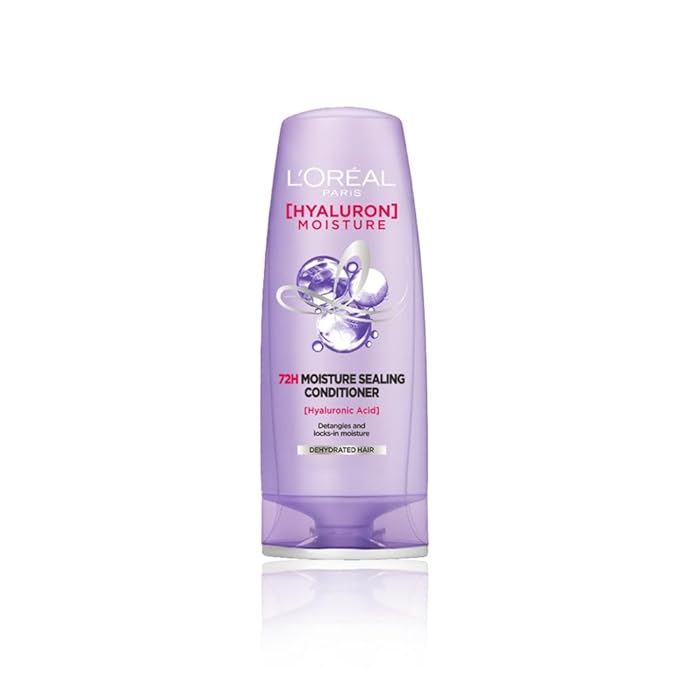
L’Oreal Paris Hyaluron Moisture 72HR Moisture Sealing Conditioner powered by Hyaluronic Acid, for Frizz-free, Hydrated and Bouncy Hair Full of Life | 340 ml

Original price was: ₹599.00.Current price is: ₹359.00.

Moisture‑sealing” conditioners fill an important role in hair care: bridging the gap between washing (which strips moisture) and styling / daily exposure (which causes further moisture loss). A good one combines humectants, emollients, and occlusive agents to replenish, smooth, and protect.
 

Category:

Description

A “moisture‑sealing conditioner” is a hair care product designed not only to condition the hair (i.e. make it softer, easier to comb, reduce tangles and damage) but also to seal in moisture. That means it helps retain water inside the hair shafts / cuticle, preventing moisture loss, keeping hair hydrated for longer periods.

Key functions:

  • After shampooing, it replenishes moisture lost during washing.

  • It smooths the cuticle (hair’s outer layer), which helps reduce frizz, improve shine, reduce roughness.

  • It helps trap moisture inside, so hair stays hydrated, bouncy and healthy‑looking for many hours or days.

  • It helps detangle, reduce breakage, makes hair more manageable.

Many moisture‑sealing conditioners are formulated with humectants (which attract moisture), emollients (which smooth and soften), and occlusive / film‑forming agents (which help “seal” moisture in by forming a light barrier over the hair shaft).


Example: L’Oréal Paris Hyaluron 72H Moisture Sealing Conditioner

This is a specific product in this category, so let’s look at its formulation, claims, and what it offers. Amazon India+3L’Oréal Paris+3Apollo Pharmacy+3

Product Claims & Highlights

  • 72‑hour hydration / moisture retention: The product claims that it can keep hair hydrated for up to 72 hours, locking in moisture. 1mg+2L’Oréal Paris+2

  • Infused with hyaluronic acid: Key ingredient is hyaluronic acid (HA), known for its capacity to retain a large amount of water (often claimed as up to 1000 times its own weight) and for re‑plumping / hydrating properties. L’Oréal Paris+2Amazon India+2

  • For dry & dehydrated hair: Especially targeted at hair that is lacking moisture — dry, dull, lifeless. Amazon India+1

  • Shine and bounce: Besides hydration, the product promises to give hair shine, improve texture, make hair bouncy, smoother, manageable. 1mg+2Apollo Pharmacy+2

  • Lightweight, non‑weighing formula: Designed so that it hydrates without making hair feel heavy or greasy. Amazon India+2Amazon India+2

Key Ingredients & Their Roles

Some of the ingredients from the L’Oréal product:

  • Water (Aqua) — base solvent. Provides medium to dissolve and distribute other ingredients. 1mg+1

  • Hyaluronic Acid / Sodium Hyaluronate — humectant: attracts and holds water, helps hair retain moisture, provides plumping / hydration. L’Oréal Paris+1

  • Dimethicone (and Amodimethicone) — silicone‑type emollients / film formers; smooth the cuticle, reduce friction, help give slip (ease detangling), help seal moisture by forming a light barrier. Amazon India+1

  • Glycerin — another humectant; attracts water from environment or deeper layers of hair (if moisture is available) and helps maintain hydration. 1mg

  • Various conditioning agents (like behentrimonium chloride etc) — help smooth, detangle, improve combability. 1mg+1

  • pH adjusters, acids (lactic acid, etc.) — help maintain hair’s ideal pH; may also help with smoothing cuticle by slightly acidifying. 1mg+1

How It Works (Mechanism of Action)

Putting the ingredients and function together, here’s how a moisture‑sealing conditioner works in practice:

  1. After shampooing, hair is clean but has lost natural oils or has opened cuticles (due to cleansing action). The hair cuticle is more porous and moisture can escape easily.

  2. When conditioner is applied to damp hair, humectants like hyaluronic acid and glycerin pull water into the hair shaft and help restore moisture.

  3. Emollients and silicone‑based ingredients smooth the cuticle, closing the lift of cuticle scales, making the hair surface smoother. A smooth cuticle reflects light better (so hair looks shinier) and has less friction (less tangling, breakage).

  4. Film‑forming / occlusive agents (like dimethicone) coat the hair shaft, forming a protective barrier over the cuticle. This barrier reduces moisture loss (from inside to environment) and protects from external aggressors (e.g. pollution, heat, humidity). Because cuticle is smoother, moisture sealing is more effective.

  5. Over time (when used regularly), the hair maintains improved hydration levels, less frizz, better manageability, more bounce and shine. Hair looks less “dry, dull, brittle”.


Full Benefits of Using a Good Moisture‑Sealing Conditioner

Here are in detail what you can expect from a good product in this category, especially one like L’Oréal Hyaluron 72H Moisture Sealing Conditioner.

  1. Long‑lasting hydration

    • Reduced dryness for longer periods between washes.

    • Even after 1‑2 days, hair should feel less rough or tight.

  2. Improved Hair Texture & Softness

    • Smooth, softer to the touch, less straw‑like feel.

    • Easier detangling: fewer knots, less breakage when combing.

  3. Shine & Luster

    • Smoother cuticle = better light reflection = shinier appearance.

    • Hair looks healthier, more vibrant.

  4. Bounce & Volume

    • When hair is well‑hydrated, it tends to look “plumper” / healthier.

    • Not weighed down, so retains bounce.

  5. Reduced Frizz and Flyaways

    • Cuticle smoothing, moisture retention help reduce frizz.

    • Hair less reactive to humidity changes.

  6. Protection & Barrier Maintenance

    • Helps protect hair from environmental stress (heat, pollution) that can dry hair out further.

    • May reduce damage when styling (drying, heat‑tools).

  7. Manageability

    • Easier to comb & style.

    • Less tangling, less breakage.


How to Use a Moisture‑Sealing Conditioner for Best Results

To get the maximum benefit, using it correctly is important. Below are tips and an ideal regimen Moisture Sealing Conditioner.

  1. Shampoo First

    • Use a mild cleanser to remove oils, dirt. Some shampooing opens cuticle, which allows conditioner to penetrate better Moisture Sealing Conditioner.

  2. Towel Dry / Remove Excess Water

    • Hair should be wet but not dripping. Too much water dilutes conditioner; too little may make it harder to spread Moisture Sealing Conditioner.

  3. Apply Conditioner

    • Focus on lengths and ends, not scalp (unless specified). Scalp often has natural oils; conditioner may weigh it down if used at roots Moisture Sealing Conditioner.

  4. Leave‑On Time

    • Most conditioners benefit from a few minutes (1‑2 minutes or more) to allow ingredient penetration. The L’Oréal product recommends about 2 minutes. 1mg+2L’Oréal Paris+2

  5. Rinse with Cool / Lukewarm Water

    • Rinsing cooler helps flatten cuticle, helps lock moisture in. Hot water can lift cuticle and strip oils Moisture Sealing Conditioner.

  6. Post‑Conditioning Care

    • Optionally use a leave‑in if hair is very dry Moisture Sealing Conditioner.

    • Avoid heat damage, use heat protectant Moisture Sealing Conditioner.

    • Reduce wash frequency if hair gets too dry; use conditioning treatments in between Moisture Sealing Conditioner.

  7. Consistency

    • Using regularly helps build up moisture, make effects more lasting. Moisture‑sealing conditioners are less about one‑time miracles, more about cumulative improvement Moisture Sealing Conditioner.


Key Considerations & Possible Downsides

Even good moisture sealing conditioners have trade‑offs and things to watch out for. Here are potential cons or cautions:

  1. Build‑up

    • Film formers, silicones, emollients may leave residue over time, especially if you use lots of styling products or heavy oils. This can lead to dullness, slowing hydration over time. Periodic clarifying shampoo might be needed Moisture Sealing Conditioner.

  2. Not a Substitute for Protein

    • If your hair is damaged (split ends, chemical treatments), protein treatments might be required. Moisture conditioners help softness/feel, but may not fix structural protein damage Moisture Sealing Conditioner.

  3. Over‑Moisturizing / Limpness

    • Too much conditioning (or leaving product too long) can sometimes make fine hair limp, heavy. Particularly if the formula is rich or has heavy silicones or emollients Moisture Sealing Conditioner.

  4. Scalp Issues

    • If applied to scalp regularly, could contribute to oiliness or clogging follicles for some people, depending on scalp type Moisture Sealing Conditioner.

  5. Scent / Allergens

    • Many conditioners have fragrance; for sensitive skins/scalps this can cause irritation Moisture Sealing Conditioner.

  6. Effect Duration Affected by Environment

    • High humidity, heat, washing frequency, exposure to UV or pollution can undermine moisture retention. Also, if ambient humidity is very low, moisturizers/humectants may draw moisture from hair or deeper layers, which might cause temporary dryness unless sealed properly Moisture Sealing Conditioner.

  7. Cost vs Benefit

    • High‑profile “moisture‑sealing” conditioners often cost more; you need to see if benefit is noticeable vs more basic conditioners for your hair needs Moisture Sealing Conditioner.


Comparison with Other Types of Conditioners

To understand moisture sealing conditioners better, it helps to see how they compare with other types:

Feature Moisture‑Sealing Conditioner Regular / Basic Conditioner Protein Conditioner / Repair Mask
Main goal Hydration + moisture retention + sealing cuticle Softening, smoothing, detangling Rebuilding structural strength, repairing damage
Key actives Humectants (HA, glycerin), emollients, occlusives / film formers (silicones, oils) Emollients, mild smoothing agents Proteins (keratin, silk, etc.), strengthening agents
Typical use frequency After each wash or as often as hair is washed After each wash 1‑2× per week or as needed depending on damage
Effect on fine / limp hair Risk of weighing down if formula is heavy; lightweight sealing agents required Usually lighter, less “sealed” feel Can make hair stiff / heavy if overused; best balanced use
Frizz control / shine Very good when sealing works well, better cuticle alignment Moderate May help, but hydration and sealing are more crucial for shine & frizz control

Deep Dive: Why Hyaluronic Acid Is a Big Part of Modern Moisture‐Sealing Conditioners

Using the L’Oréal example, hyaluronic acid (HA) has become popular in conditioners due to several properties:

  • High water‑retention: HA is a humectant that can hold many times its weight in water. This helps maintain moisture inside hair after washing. L’Oréal Paris+1

  • Re‑plumping effect: By attracting water, HA temporarily plumps the hair shaft, perhaps making hair feel fuller, less brittle, smoother.

  • Lightweight feel: Pure HA is usually not greasy; large molecules may coat outside, smaller molecules can penetrate somewhat; when formulated well, this helps hydration without a heavy oil‑like feel.

  • Skincare inspiration: Designers are borrowing skincare actives (HA, antioxidants, etc.) and bringing them into hair care. The “inspired by skincare” messaging is common. L’Oréal uses that idea: they say this conditioner “makes the science of skincare a part of your hair care routine.” Amazon India+1


Ingredient Quality, Formulation, & What to Look for

When choosing a moisture sealing conditioner, or when evaluating one like L’Oréal’s, these are important formulation features / ingredients to check.

“Good” Ingredients / Desirable Features

  • Humectants: Hyaluronic acid / sodium hyaluronate, glycerin, etc. These attract water into hair Moisture Sealing Conditioner.

  • Emollients / Oils: Light oils (argan, jojoba, coconut, depending on hair type), shea butter etc. These smooth hair and improve softness.

  • Film formers / Occlusives: Silicones (dimethicone, amodimethicone), certain polymers; help seal moisture and protect the cuticle.

  • pH Balanced / Slightly Acidic: Hair cuticle lies flat better in acidic pH; helps in closing cuticle after washing.

  • Fragrance / Allergen Content: Low fragrance or mild scents; avoid heavy fragrance for sensitive scalps.

  • Free from harsh sulfates / excessive drying alcohols: Sulfate shampoos can strip moisture; conditioner should compensate.

What to Avoid or Be Cautious About

  • Heavy silicones/oils for fine hair: May cause hair to look greasy or weighed.

  • Hard water / mineral build up: May reduce efficacy of conditioner + make hair feel coated. Periodic clarifying is helpful.

  • ILL‑FORMULATED “seal” that blocks moisture inwards: If barrier is too impermeable, hair may not absorb moisture well; or hair roots/scalp may feel occluded.

  • Over‑use: Using too much product, leaving on for too long, or applying at roots when not needed can lead to buildup.


Real‑World Examples & Usage Scenarios

To give a clearer idea, here are examples of when moisture sealing conditioners are especially helpful, and how people tend to use them.

Common Scenarios

  • Dry, damaged hair: After chemical processing (hair color, bleaching), heat styling, exposure to sun, humidity, pollution. Moisture is lost, cuticle damaged. Moisture sealing conditioner helps restore softness, prevent further damage.

  • Curly / Coily Hair: Such hair types often need extra moisture because natural oils from the scalp have difficulty traveling along curly strands. Sealers help lock in water between washings, reduce frizz.

  • Hair in harsh climates: Very dry air (winter, arid zones), high heat, sun exposure—these cause water loss; moisture sealing helps hair endure.

  • Frequent washers / swimmers: Chlorine, salt water, frequent washing can strip hair. A moisture sealing conditioner helps replenish and shield after washes.

How People Incorporate It

  • Use after every shampoo.

  • Combine with matching shampoo / haircare line (e.g. a “moisture filling shampoo”). L’Oréal suggests pairing with its Hyaluron Moisture Shampoo line. Apollo Pharmacy+1

  • Sometimes leave the conditioner on a little longer than usual (2‑3 minutes) for extra absorption.

  • For extra moisture, follow with a leave‑in product or light oil on ends.


Comparison: L’Oréal Moisture‑Sealing Conditioner vs Other Products

Let’s compare L’Oréal’s moisture‑sealing conditioner with what alternative products might offer, or what you might get from other conditioners.

Feature L’Oréal Hyaluron 72H Moisture Sealing Conditioner Other moisture/repair brands / premium masks
Duration of hydration Claims up to 72 hours moisture retention. 1mg+1 Some claim 48h, some 72h, some “continuous hydration” depending on price/type.
Key active Hyaluronic acid + emollients + silicones. Others may use similar humectants, plant oils, but some use proteins, butters, etc.
Lightweight / non‑weighing Promoted as lightweight, non‑weighing. Amazon India+1 Some richer masks are heavier; may weigh fine hair down if used too often.
Price / Availability Widely available drugstore product, moderate price. Premium / salon masks are costlier; may give more intense results, but require more care.
Fragrance & formulation Contains fragrance (like “perfume / fragrance”) and other typical conditioner ingredients. May have fragrance‑sensitive individuals who react. Some premium / natural brands are fragrance‑free, or milder; some are silicone‑free or designed specifically for sensitive scalps.

Detailed Breakdown: L’Oréal Hyaluron Moisture Sealing Conditioner (from available sources)

Here are more detailed specs and details from the L’Oréal product:

  • Net quantity / sizes: Common size is 180 ml for India; also available in smaller travel sizes. Spencers+1

  • Hair types suited: Advertised for “dry & dehydrated hair”, dull / lifeless hair; but labeled as suitable for “all hair types” in many markets. Amazon India+2L’Oréal Paris+2

  • How to use: After shampooing, apply conditioner generously on damp hair (lengths & ends), leave for ~2 minutes, rinse. Frequent use. Apollo Pharmacy+1

  • Visible results: Hair becomes shinier, smoother, bouncy, easier to detangle. Reduces dullness. Locks moisture. Amazon India+2Apollo Pharmacy+2


Extended: What Makes a “Seal” Actually Work

To understand why some conditioners succeed in sealing moisture well and others less so, here are technical or functional factors.

  1. Cuticle Condition

    • If cuticle is raised or damaged, moisture escapes and product penetration is uneven. Smoothing agents and pH control help in flattening cuticle.

  2. Molecule Size & Penetration

    • Humectants with small enough molecules (or derived forms) can penetrate partially into hair shaft; larger molecules stay closer to surface but still contribute.

  3. Barrier Agents / Film Formers

    • Silicones, polymers, oils with occlusive properties help form a partial barrier. But the barrier must be breathable—not completely sealing.

  4. Balance of Humectant vs Occlusive

    • Too much humectant without sealing can cause moisture to be drawn in but also escape; too much occlusive can block absorption. Good formulas balance the two.

  5. pH Level

    • Acidic pH helps flatten cuticle; flatter cuticle = less moisture loss, smoother surface.

  6. Frequency & Environmental Conditions

    • Even the best conditioner will lose efficacy if hair is exposed to very drying environments, or washing often, or heat/high UV. Regular maintenance and care helps.


Pros & Cons of Moisture‑Sealing Conditioners (Overall & L’Oréal Example)

Pros

  • Great for restoring hydration after shampooing or damage.

  • Makes hair feel softer, smoother, shinier.

  • Helps reduce frizz, flyaways.

  • Improves manageability (less tangling, breakage).

  • Can keep hair looking hydrated over multiple days (as claimed 72h in L’Oréal case).

  • Often relatively easy to use — like regular conditioner, no need for long mask times or special routines.

  • Wide availability and moderate pricing in many markets for popular brands.

Cons

  • Possible build‑up, especially if products (silicones, film formers) accumulate.

  • Sometimes heavy feel or weighed down effect in fine / low‑density hair.

  • May require clarifying/shampooing periodically to remove build‑up.

  • Fragrance or other additives may irritate sensitive scalps.

  • Claims like “72 hours” may not hold in all situations (climate, washing frequency, styling routines).


When Moisture‑Sealing Conditioners Might Not Be Enough / When to Use Additional Treatments

Conditioners are helpful, but in some cases more intensive care might be needed:

  • Deep Damage / Chemical Processing: Hair that’s been bleached, chemically relaxed, heavily heat‑styled may have protein loss, structural damage. A protein mask or treatment may be required in addition.

  • Severe Dryness / Breakage: When hair is breaking or ends are splitting, regular sealing may help symptomatically, but trimming ends or professional repair may be necessary.

  • Scalp Issues: If scalp is very dry, flaky, or has dermatitis, using conditioner alone on ends won’t address scalp health; you might need scalp treatments / shampoos.

Reviews

There are no reviews yet.

Be the first to review “L’Oreal Paris Hyaluron Moisture 72HR Moisture Sealing Conditioner powered by Hyaluronic Acid, for Frizz-free, Hydrated and Bouncy Hair Full of Life | 340 ml”

Your email address will not be published. Required fields are marked *

Go to Top